







New vehicles continue to climb in price. Many drivers are seizing the opportunity with company car and salary sacrifice programs available through their jobs.
The latter can be a significant financial relief, as payments are deducted from pre-tax salary. While there are downsides—like never fully owning the car and paying benefit-in-kind tax—these arrangements often prove more affordable than traditional financing methods like PCP, HP, or private leasing. It’s no wonder over a million new cars sold last year in the UK were part of these schemes.
For auto manufacturers, tailoring specific models to fit these programs makes perfect sense. Electric vehicles stand out as the most beneficial, attracting only 3% in BIK tax. Yet for those who prefer not to switch to electric, there are many plug-in hybrids boasting impressively low emissions and astonishing official MPG figures—850mpg is real.
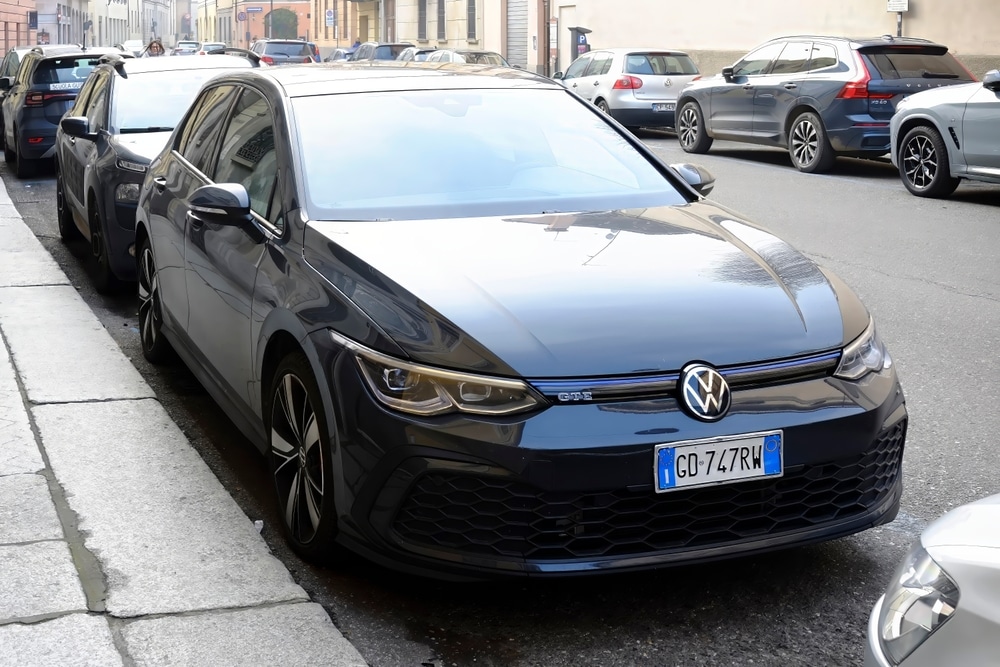
A notable contender in this category is my long-term test car, the Volkswagen Golf GTE. If you’re searching for a sporty hatchback within a reasonable budget, the Golf will likely come onto your radar.
The GTE boasts 268bhp, capable of roaring to 62mph in just 6.6 seconds. While the GTI version has slightly less power at 261bhp, it’s lighter and reaches the same speed in 5.9 seconds. At a price of £40,140 for the GTE versus £40,870 for the GTI, the difference is minimal.
So, which one should you choose? If everything else is equal, the GTI would win for a driver focused purely on performance. However, in terms of salary sacrifice, the GTI lands in a higher BIK tax bracket while the GTE enjoys one of the lowest. GTE drivers pay £155 monthly in BIK tax, compared to £243 for GTI drivers—adding up to a significant annual difference of nearly £1,000.
Although they share branding, the GTE is distinct from being a simple GTI with a plug-in hybrid setup. It’s a sportier option compared to the Golf eHybrid, which has the same 19.7kWh battery but lower horsepower at 201bhp (priced at £36,420).
So, does the GTE’s potential savings and its sporty hatchback appeal converge to attract car enthusiasts? This is a key question I’m aiming to explore.
Powering the GTE is a PHEV system comprised of a 160bhp 1.5-litre turbocharged petrol engine and a 108bhp electric motor, delivering a combined power output of 268bhp through a six-speed dual-clutch gearbox (DSG).
The substantial 19.7kWh battery allows the GTE to drive purely on electric power for up to 81 miles, significantly outperforming the Mercedes-Benz A250e, which only manages around 44 miles on a single charge.
Nonetheless, there are limitations. Drivers must balance charging the battery with refueling the petrol tank. For someone like me, without a home charging option, I need to determine if the GTE’s lower operating costs compensate for the lack of charging convenience. Thankfully, its compatibility with DC fast chargers is a positive aspect.
From a design standpoint, the GTE positions itself between the standard Golf and the GTI. Both models feature an aggressive front design, but the GTI has a lower profile, unique wheels, and prominent dual exhausts, while the GTE has its exhaust neatly concealed.
I’m particularly fond of the Mk8.5 GTI’s aesthetic and how it sits on the street. While it isn’t the flagship hot hatch, the GTE isn’t far behind in style, particularly in the striking Crystal Ice Blue color (costing £1,375). Let’s refrain from discussing the illuminated badges.
Inside, the GTE maintains the standard Golf’s layout: a massive 12.9-inch touchscreen commands the dashboard, with physical buttons relegated mostly to the steering wheel and an abundance of shiny black plastics throughout.
Wireless phone charging comes standard, and the sporty seats are upholstered in Jacara checked cloth—a design similar to the GTI but featuring blue and white accents instead of red and black. They’re notably comfortable.
A downside, stemming from the large battery, is that the GTE’s boot space is restricted to 273 liters, down from 381 liters in the standard Golf. This could present a challenge for practical use.
I have yet to spend intense driving time in the GTE, but my initial impressions suggest promise. Though it lacks the GTI’s laser-like focus, the GTE still showcases its lineage: steering that is well-balanced and responsive, precise handling, and a sufficiently rigid chassis for some spirited driving.
Not too shabby for an economical, company car option.
Update 2
I’ve always had a passion for science and exploration. From childhood experiments in my bedroom to tinkering with cars, experimentation has become second nature for me.
My father gets nervous whenever I fiddle with the settings on his Audi A5 Cabriolet, and a similar reaction occurred recently with my brother’s new Renault Clio when my dad was hovering: “Luke, be careful. He’s at it again!”
This brings us back to the Golf GTE. I’ve made quite a few adjustments—considering nearly everything operates through the touchscreen—to customize it to my liking.
Some of the safety features leave much to be desired, notably the lane-keeping and speed-limit alerts (more on that later), often necessitating that I turn them off every time I start the car. It’s tiresome.
I have also set my preferred driving mode: Sport drivetrain (offering lively acceleration) along with comfort settings for other features, including Volkswagen’s versatile 15-way adjustable Dynamic Chassis Control adaptive suspension.
Last week, I had three round trips of 130 miles within four days. On Monday, the fully fueled tank indicated a range of approximately 400 miles, and the fully charged 19.7kWh battery estimated 60 miles.
I aimed for efficiency, wanting to spread the use of battery power across the three journeys, as I lack a home charger and cannot charge nightly.
I was five miles into the first trip when I realized the engine had yet to engage. Upon recognition, I learned the GTE was in E-mode, fully powered by electricity until the battery was depleted. Frustrated, I switched to Hybrid mode, and the petrol engine kicked in.
Arriving at my destination after 65 miles, I was startled to find I had consumed half of the electric range already. A re-evaluation was essential since this pace wasn’t sustainable.
Before heading back, I tinkered again and discovered the car cannot default to Hybrid on start-up. Why, Volkswagen?
However, I found a ‘manual control’ setting, which lets me specify how much battery charge I want remaining upon arrival. This was just what I needed, so I set it to reserve 20% of the charge.
Yet to my dismay, the car drained that allocation too quickly, using it within the first 20 miles, leaving the engine to power me for the remaining 55 miles. I misunderstood; the car needed to be informed about my journey length.
For my next trial—the battery fully recharged—I set my 20% limit again, this time inputting my destination into VW’s built-in navigation (normally I use Android Auto).
Having been advised by road tester Illya Verpraet that this method should work, I thought I was onto something. But after 20 miles, the powertrain took control and depleted the allocated charge again. Patience is necessary.
This experiment continued over the following trips. By week’s end, with nearly 400 miles traveled in total, I achieved an impressive 77mpg.
However, to provide a fair assessment, I reevaluated using just the 1.5 TSI four-cylinder engine, averaging 52mpg. Even without beginning with a full charge, the hybrid system effectively maximized usable energy through regenerative braking. I was pleasantly surprised.
Thus, does weekly charging and careful setup each time justify the extra 25mpg? For me, undoubtedly, yes.
Without a home charger, my charging expenses equaled filling half a tank of petrol, but the hybrid vehicle shines when it successfully integrates both power sources.
As I spend more time with the GTE, I’m optimistic that habit will simplify this process.
Update 3
The Golf GTE has proven delightful thus far. This plug-in hybrid hot hatch is easy to live with, supremely comfortable, boasts impressive fuel economy, and has a stylish demeanor. One could argue, “Do you really need more car than this?”
However, there’s been some chatter from hot hatch fans—including Autocar’s own Golf GTI owner Jack Warrick—suggesting the GTE has impressive specs but lacks the performance to back it up.
Warrick noted, “It doesn’t quite bring excitement in the way its badge may lead you to expect,” asserting the purer GTI is more appealing to driving enthusiasts. While I understand this feedback, I counter by asking: is the GTE engaging enough for the average driver?
To test this premise, I chose my last few commutes home to avoid the M3, opting for the A31 and its intricate B-roads. Surprisingly, I had fun. Sure, it’s not a GTI; it doesn’t provide the same feedback through the steering wheel, nor can you beat that sweet EA888 turbo engine, and the extra weight from the hybrid system is noticeable.
But genuine excitement is still present. The electric motor’s instant torque gives the GTE a lively feel when navigating through sharp corners, and once the petrol engine joins, power delivery is robust.
Steering offers sufficient weight and precision to inspire confidence. Grip levels are commendable, and body roll remains minimal. The GTE might not relentlessly urge you on, but it does respond positively when you push it a bit harder.
The true measure of an enthusiast’s vehicle is whether it inspires spontaneous drives just for the joy of it. I can admit that I’m not waking up eager for a Sunday drive in the GTE—but it’s compelling enough that I’m opting for the longer routes home, which is a win.
Update 4
Hatchback popularity has waned in recent years, largely overshadowed by SUVs: they comprised nearly 60% of new car sales in the UK this year, up from just 13% a decade ago.
Now, I appreciate an SUV. They offer ample space, a raised seating position, and large fuel reservoirs. Earlier this year, I drove a Dacia Duster Hybrid 140 and declared it “all the car you’ll ever need.”
Nonetheless, having spent extensive time with the Volkswagen Golf GTE—logging nearly 2000 miles—I’d choose a hatchback over an SUV.
The Golf can tackle nearly any task presented. On one occasion, I needed a larger vehicle to accommodate numerous friends and their festival gear, which Kris Culmer’s large Mazda CX-80 handled effortlessly. However, day-to-day, the Golf has been truly excellent.
From a recent flat clearout, I had to dispose of a television with its stand, clothing, boxes, and other needless items. The Golf swallowed everything with ease when the seats were folded, offering a total capacity of 1162 liters, leaving ample room for both of us in the front.
A few days later, I picked up a new television 30 miles away. The 55-inch screen was a bit intimidating, but with rear seats down, it fit comfortably.
Although it involved some adjustments to the front seats, we got it in. Another win for the Golf. I completed a couple of longer trips, and the Golf consistently performed superbly, averaging 49mpg.
More recently, I undertook a trip that involved a wedding and a vacation abroad—again necessitating ample luggage space—and the Golf handled it effortlessly.
At no point did I wish for a larger vehicle, which I deem the highest praise for a hatchback. The Golf’s 4289mm length made parking hassle-free, its intuitive infotainment system kept us entertained, and its sporty chassis provided engaging handling on any length of trip.
Though I do wish for a slightly larger boot (I’ve had to lower the seats or rearrange bags frequently), my overall experience has been positive, given how well the car functions.
The Golf maintains its status as an exceptional vehicle and genuinely rivals any SUV. However, would I choose the GTE variant again? That, I have yet to decide, as my time with it is drawing to a close.
Final report
A recent email from reader Rob Lightbody provides a fitting beginning for this final assessment and aligns perfectly with the considerations for our long-term test car.
“As a 2017 Golf GTI owner, do you think you’d be better off with the GTI instead of the GTE?” he inquired. “The GTI has a notably larger boot, and you wouldn’t have to store an awkward charging cable. You might lose some MPG, but I consistently exceed 40mpg on long drives.”
Rob’s query is worthy of contemplation, especially since the GTI is priced at £41,810—just slightly over £1500 more than the GTE—making it an attractive option. However, it’s not an easy choice based on my experience with the plug-in hybrid Golf.
The GTE’s styling is striking, and it looks fantastic. The aggressive front end and alluring Crystal Ice Blue paint (a £1,375 extra) adds appeal. I wish it had visible exhausts—since they’re hidden—and a way to disable the overly flashy illuminated badges.
The GTE’s interior might be the most comfortable I’ve experienced all year, thanks to the well-bolstered seats. Commutes have been a breeze, causing no discomfort on long journeys. I also appreciate the 12.9-inch infotainment system—while it may seem flashy, it is responsive and user-friendly.
However, some touch controls can be frustrating, especially for the sunroof, which fails to respond at times. While the cabin aesthetics could use improvement—too much gray and cheap-feeling plastics—this is a minor grievance.
Rob’s observation regarding storage space is pertinent. I had previously commented on the GTE’s limited 273-liter boot—made more inconvenient by a lack of a designated space for the charging cables.
The GTI, freed from a bulky 19.4kWh battery, boasts an extra 100 liters of storage space. This may not matter daily, but it becomes relevant for longer trips. For instance, I could only accommodate one suitcase or two weekend bags in the GTE’s boot.
Ultimately, when opportunity allows, the GTE offers delightful driving experiences. While not as fast as the more dedicated GTI, it still impresses with solid grip, a well-tuned chassis, and weighty steering. This combination encourages me to take the scenic route home when battery charge permits.
As for Rob’s final point about MPG, it’s crucial for prospective GTE buyers to consider. Without a home electric source, I’m not the ideal candidate for this car.
However, as more companies adopt salary sacrifice schemes, coupled with the GTE’s relatively low £40-per-month BIK tax (compared to the GTI’s £243), it is likely to find a home with some of the 43% of UK residents lacking a private charging setup.
For me, relying on (expensive) public charging options to maintain the GTE’s 19.4kWh battery meant that while achieving an impressive peak of 77mpg, the average cost per mile was higher (19p) than simply running it on petrol (12p).
While this outcome reflects public charging costs more than the plug-in hybrid’s efficiency, a fully self-charging hybrid Golf would resonate with me. Interestingly, Volkswagen is exploring such a powertrain, making it worth watching.
To circle back to Rob’s original question: would I prefer the GTI? If finances permitted, I would choose it. But for a company car user, the substantial £2436 in annual BIK savings might sway the decision.
While the GTI offers refinement and razor-sharp thrills, the GTE remains a solid vehicle that is, as required, quite enjoyable to drive.
Volkswagen Golf GTE
- Prices: List price new £40,140 List price now £40,140 Price as tested £44,435
- Options: Crystal Ice Blue metallic paint with black roof £1375, panoramic sunroof £1250, Adaptive Chassis Control £735, 18in Catania black alloy wheels £600, parking camera £335
- Fuel economy and range: Claimed economy 849.9mpg Claimed electric range 81 miles Fuel tank 40 litres Test average 46.7mpg Test best 77.0mpg Test worst 39.0mpg Real-world range (petrol) 398 miles (ICE only) Real-world EV range 60 mile.
- Tech highlights: 0-62mph 6.6sec Top speed 143mph Engine 4 cyls in line, 1498cc, turbo, petrol, plus electric motor Max power 268bhp Max torque 258lb ft Gearbox 6-spd dual-clutch automatic Boot 273 litres Wheels 18in, alloy Tyres 225/40 R18 Bridgestone Potenza Kerb weight 1670kg
- Service and running costs: Contract hire rate £716.49 pcm CO2 8g/km Service costs None Other costs None Fuel costs (plus electric charging) £881.83 Running costs including fuel £881.83 Cost per mile 19 pence Faults None