


Fiat has notably established its dominance in Europe’s A-segment with the 500 and Panda models. However, since the discontinuation of the Punto in 2018, the absence of a vehicle in the B-segment created a significant void. Enter 2024—the launch year for the Grande Panda, a budget-friendly supermini that skillfully merges elements of hatchbacks and crossovers.
It’s essential to clarify that the Grande Panda is not just the successor of the well-loved Panda, now dubbed the Pandina. A smaller variant is scheduled to appear in 2030 to fulfill that role. With a length of 3,999 mm (157.4 inches), the Grande Panda is built on the same platform as the Citroen C3, positioning it against budget-driven crossover hatchbacks like the Dacia Sandero Stepway.
We spent time with this exciting newcomer from Fiat to assess its offerings and how it integrates into Fiat’s evolving lineup.
QUICK FACTS
*Manufacturer
The Grande Panda benefits from Stellantis’ typical offerings in small hatchbacks and SUVs, featuring gasoline, mild-hybrid, and fully electric powertrains. Currently, all models are front-wheel drive, with plans for an all-wheel-drive variant in the near future.
During our evaluation, we drove the 2025 Grande Panda Hybrid in its top-tier La Prima trim, showcased in a striking Lago Blue finish.
Stylish Nostalgia Meets Modern Design
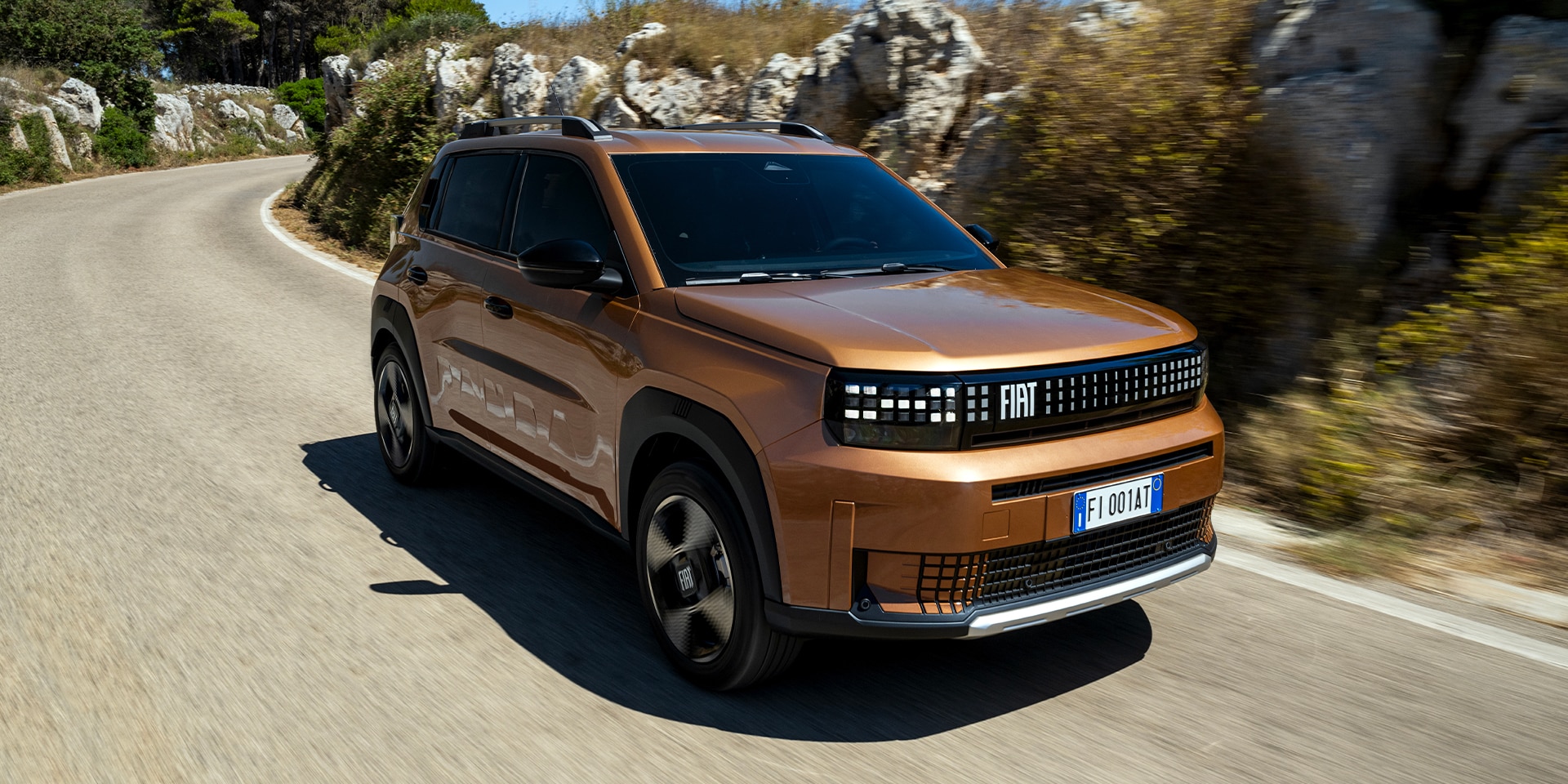
The design of the Grande Panda is a triumph for Fiat, combining nostalgic elements reminiscent of the original Panda from the ’80s with contemporary styling. Its boxy shape, elevated stance, and generous plastic cladding give it a crossover-like appearance, supplemented by aluminum-style skid plates and 17-inch alloy wheels unique to the La Prima trim.
Upon closer inspection, the vehicle offers subtle design nods, such as pixel-style LED lights and a grille that evokes the iconic windows of Fiat’s Lingotto factory in Turin. The name “Panda” is cleverly engraved along the doors and on the tailgate, while the classic striped Fiat badge makes a nostalgic return on various exterior elements.
Photo Credits: Thanos Pappas/CarScoops
Throughout our time with the Grande Panda, it garnered a considerable amount of attention on the streets, with many recognizing it as a Fiat. This visibility indicates that impressive design can serve as a powerful marketing asset, even when the vehicle shares components with other models.
A Playful Yet Functional Interior
The cabin reflects a lively spirit, surpassing expectations for a budget vehicle. While many surfaces are composed of hard plastic, these materials are sustainably sourced. Fiat employs thoughtful color schemes and trim to maintain visual engagement.
A standout feature is the bamboo-fiber dashboard trim exclusive to the flagship La Prima model, adding a touch of Mediterranean charm. The pill-shaped digital cockpit pays homage to the oval track atop the Lingotto factory, complete with a mini replica of the original Panda encased in a transparent, yellow-tinted trim. The setup consists of a 10-inch cluster alongside a 10.25-inch infotainment display, although the base model Grande Panda Pop substitutes the latter with a smartphone holder.
Photo Credits: Thanos Pappas/CarScoops
The seating is comfortable, designed with a modern aesthetic complemented by light-colored accents throughout. However, the glossy black plastic on the center console detracts slightly from perceived quality, as it is prone to scratches.
In terms of practicality, the Grande Panda excels with numerous storage options; however, a rubberized dashboard cover would improve usability for small items. Despite its sub-4m length, the vehicle can comfortably accommodate four adults, or five for brief journeys. It offers commendable rear legroom and headroom, along with a boot that can store up to 412 liters (14.5 cubic feet) of luggage.
Driving Experience: What to Expect on the Road
The Grande Panda is constructed upon Stellantis’ Smart Car architecture, which it shares with the Citroen C3, along with its larger sibling, the C3 Aircross, and the Opel Frontera. This budget-friendly framework is distinct from the CMP/eCMP used for other small hatchbacks and SUVs and was originally designed for emerging markets like India and South America.
My initial impression was the remarkably light steering at idle, reminiscent of the “City” mode found in older Fiat models. The steering system becomes slightly firmer with speed, yet it retains agility, making city driving a breeze.
The suspension system strikes a balance between comfort and handling agility. While the budget nature of its design is evident on rough roads, it allows for lively engagement in urban settings. The mild-hybrid 1.2-liter engine delivers solid performance, aided by the electric motor integrated into the responsive dual-clutch transmission that enhances low-speed maneuvers.
Photo Credits: Thanos Pappas/CarScoops
The advantages of a mild-hybrid setup include lower fuel consumption and a quieter driving experience, although its compact 0.9 kWh battery offers limited efficacy compared to a fully-fledged hybrid like the Toyota Yaris. Nevertheless, it contributes positively to the overall driving experience.
On the highway, the Grande Panda impressed me, revealing itself as an upgrade from the smaller, older Pandina. Although wind and tire noise become noticeable at higher speeds, they are manageable and don’t compromise comfort.
One minor issue is the persistent alerts from safety systems like the speed limit warning, which can be disabled via a button on the center console—though frustratingly, this setting must be reapplied after each restart.
Additionally, the lack of advanced driver-assistance features such as adaptive cruise control is disappointing, especially for a vehicle of the La Prima’s caliber.
Pricing and Competitors
In Greece, the Grande Panda starts at €16,990 ($19,700) for a non-electrified engine with a manual transmission and the basic Pop trim. This pricing positions it as one of the most budget-conscious options in the B-segment, slightly more than the Dacia Sandero Stepway at €16,890 ($19,600) and marginally less than the Citroen C3, priced at €17,300 ($20,100).
The mild-hybrid automatic variant begins at €21,077 ($24,500), while the fully-loaded La Prima that we assessed is priced at €24,677 ($28,700). The priciest option is the fully electric La Prima at €28,877 ($33,600) before incentives.
Besides the highlighted crossover-style hatchbacks from Dacia and Citroen, the Grande Panda faces competition from models like the Seat Ibiza and Skoda Fabia within the VW Group, alongside the similarly priced Kia Stonic small SUV. For those seeking additional space, the Citroen C3 Aircross starts at €18,900 ($22,000), and the more rugged Dacia Duster is available from €20,500 ($23,800) in the same market.
Final Thoughts
The Grande Panda represents precisely the type of vehicle Fiat needed to enhance its presence and reputation in Europe. It’s affordable, functional, and sports enough character to distinguish itself in a saturated market filled with small hatchbacks and crossovers.
Although it shares its underpinnings with the Citroen C3, it successfully carves out its unique identity as a Fiat with a distinctive personality.
While the budget-oriented nature is apparent in certain interior materials and ride comfort at high speeds, it truly shines in urban settings, providing a pleasant, dynamic, and manageable driving experience. The mild-hybrid variant elegantly strikes a balance between affordability and innovative technology, serving as a bridge between the entry-level gasoline model and the niche electric option.