






A Legacy from the Past
It has been more than six decades since the Packard name faded from the automotive scene. While many modern car enthusiasts might not recognize the brand, Packard was once synonymous with opulence and innovation, especially when linked to other esteemed American marques, known together as ‘the three Ps’ alongside Peerless and Pierce-Arrow.
The brand was also a pioneer in several automotive technologies, including early adaptations of air conditioning. This tribute reexamines the storied history of Packard, chronicled across 30 captivating chapters.
Image: The 1940 Packard Custom Super Eight One-Eighty Sport Sedan by Darrin sold for $280,000 at RM Sotheby’s in 2021.
The Founders
Founded by brothers James Ward Packard and William Doud Packard in 1890, originally as an electric company, Packard transitioned into the automotive sphere after a frustrating encounter with a Winton car. James’s dissatisfaction prompted a friendly challenge that ultimately led to the creation of their first vehicle.
Interestingly, their sister, Alaska Packard, broke barriers as an FBI special agent in the 1920s, marking an era of diversity in the family.
Image: James Ward Packard, left, and William Doud Packard, right.
Packard’s First Automobile
In 1899, Packard unveiled its inaugural vehicle, a modest two-seater powered by a single-cylinder engine. Only five of this model were manufactured, with the first sale occurring just a short distance from the initial factory location in Warren, Ohio.
The company subsequently introduced related models, eventually achieving the feat of completing a coast-to-coast trip across America in 1903.
Image: The earliest Packard Model A.
Introducing Multi-Cylinder Engines
Packard boldly shifted gears in 1902 by producing its first multi-cylinder vehicle, the Model G, featuring a robust 6.0-liter twin engine. This marked a significant evolution for the company, although it would only manufacture a limited number of these models.
Packard Four
From 1903 until 1912, every new Packard featured a front-mounted four-cylinder engine, focusing on both quality and performance. Their early successes included innovative designs, such as the remarkably aerodynamic Model K, capable of impressive speeds at Daytona Beach.
Image: 1908 Packard Model 30.
A Step into Sixes
Packard made a timely entry into the six-cylinder engine market by 1912, producing multiple models known collectively as the Six. This wasn’t just about mechanics; it represented a pivot towards performance while retaining luxury in their design.
Image: 1912 Packard Model 1-48 Custom Runabout.
The V12 Revolution
While not the inventor of the V12, Packard was the first to incorporate it into mass production with the Twin Six model in 1915. This innovation would mark a key moment, ushering in an era of unprecedented power and performance in automotive engineering.
Royal Innovations
One of the most unique variants of the Twin Six belonged to Tsar Nicholas II of Russia, adapted for his needs with remarkable innovations, such as the Kégresse track system, allowing it to traverse difficult terrains.
Setting Speed Records
Packard’s V12 race cars, named 299 and 905, exemplified the brand’s ambition in motorsport. At that time, 299 made history as the only V12 car to finish the Indianapolis 500, marking a significant achievement on the racing circuit.
Presidential Prestige
The Twin Six also famously became the first automobile to transport a US president, Warren G. Harding, to his inauguration ceremony in 1921, symbolizing a significant shift from horse-drawn carriages to modern vehicles for such dignitaries.
Arriving at the Eight
As competition evolved, Packard introduced the Straight Eight engine in 1924, marking a shift in luxury automobile trends in the United States. This transition helped the brand maintain its status as a leader in high-end vehicles.
The Light Eight Experiment
In an effort to adapt to the economic climate during the Great Depression, Packard launched the Light Eight in 1932, which unfortunately did not resonate with their loyal clientele, leading to its swift withdrawal from the market after just one year.
The Twelve’s Resurgence
With V12 engines regaining popularity in the 1930s, Packard reintroduced the Twelve, initially conceived for a fast prototype, which adapted into a larger and more luxurious model that became a hallmark of elegance for the brand until its production ended in 1939.
Packard One-Twenty
Packard struck balancing affordability with luxury through the introduction of the One-Twenty in 1935, which featured exceptional build quality and was crucial for the company’s survival during the Depression, albeit at the cost of its upscale image.
Image: The Packard One-Twenty was a significant model for Packard.
The Final Six
In response to the One-Twenty’s success, Packard introduced the final Six in 1936, focusing on accessibility for a broader audience while maintaining the elegance synonymous with the brand.
Within its first year, it set sales records, reflecting a successful transition to mass-market production.
Packard Custom Super Eight One-Eighty
Between 1940 and 1942, the Custom Super Eight reigned as Packard’s flagship model, equipped with innovations that included air conditioning, showcasing the brand’s commitment to luxury and technology.
Reviving the Clipper Name
The Packard Clipper debuted in 1941 with a modern design, which was a departure from traditional styling, positioning itself well for post-war production strategies once civilian manufacturing resumed.
Contributions During War
During World War II, Packard became instrumental in vehicle production for the military, notably by manufacturing thousands of Rolls-Royce Merlin engines, a component that contributed significantly to the Allies’ air superiority.
Modernization Efforts
Post-war Packard vehicles underwent a transformation aimed at rejuvenating the brand’s image. The introduction of the 200 and 250 models in 1951 showcased more modern styling, but also highlighted a shift in the brand’s identity as it struggled to maintain its luxury appeal.
Further Expansion
Packard introduced the 300 model, resembling the 200 but offering extended features, catering to different market segments in a bid to consolidate its relevance in an evolving automotive landscape.
Introduction of the V8
In 1955, Packard finally introduced its first V8 engine in the Patrician model, reflecting industry trends that had shifted while the brand struggled with competitive pressures. Unfortunately, the late entry into V8 production came too late to regain lost ground.
Mayfair and Cavalier
Packard sought to diversify by launching the Mayfair model, aiming to tap into the emerging two-door hardtops market. Although this model featured appealing styling, sales failed to meet expectations during its production run.
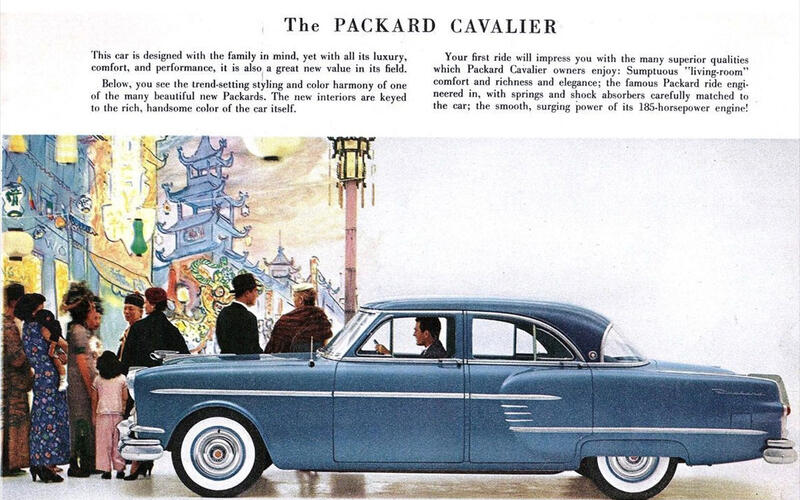
The Cavalier’s Short Run
In a bid to compete more effectively, the Cavalier model emerged in 1953 as an affordable four-door option. Unfortunately, despite its capabilities, it fell flat in sales and was discontinued by 1954.
Pacific’s Short-lived Legacy
Replacing the Mayfair, the Pacific was launched in 1954 but endured a remarkably brief lifecycle, reflecting Packard’s struggles to maintain a strong foothold in the market during that turbulent era.
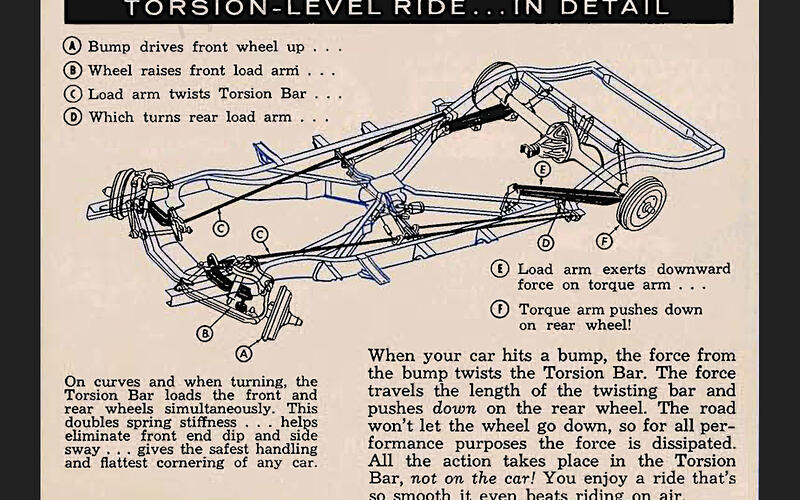
Innovating Suspension Design
In 1955, Packard introduced the Torsion-Level Ride suspension, a groundbreaking innovation providing excellent ride quality while addressing issues like weight distribution, showcasing the brand’s commitment to engineering excellence despite the decline.
The Four Hundred Model
Returning to its roots, the Four Hundred emerged using advancements from the V8 engine and Torsion-Level designs, but unfortunately, it did not manage to capture significant market share, with lifetime production numbers proving disappointing.
The Executive as a Transitional Model
As Packard aimed to innovate post-war production officially, the Executive model enlisted elements from both the Clipper and Patrician, representing a desperate attempt to return to the luxury sedan market.
The Final Years of Production
As the ’50s progressed, deterioration within the company led to a merger with Studebaker to stay afloat. The Clipper continued to exist as a Packard for rebranding, although it was now based on Studebaker’s platform, ultimately distancing itself from the original luxury image.
The Packard Hawk
During Studebaker’s ownership, the Packard Hawk emerged in 1958 as a unique model, but struggled in sales, mirroring the overall decline of the brand just a few years before its final demise.
Packard’s Final Year
1958 marked the end of the Packard production line, with the final models rolling out of the factory, reflecting the brand’s transformation from an illustrious luxury automaker to a faded name in automotive history.
Conclusion
The decline of Packard illustrates a poignant saga in American automotive history, illustrating how initially successful ventures can falter. Their decision to introduce mass-market models allowed survival during tough economic times but gradually diluted the brand’s prestige.
Ultimately, the merger with Studebaker could not resurrect the brand in the face of overwhelming competition from rivals like General Motors, leading to the eventual fading of a once-revered name in luxury automobiles.